
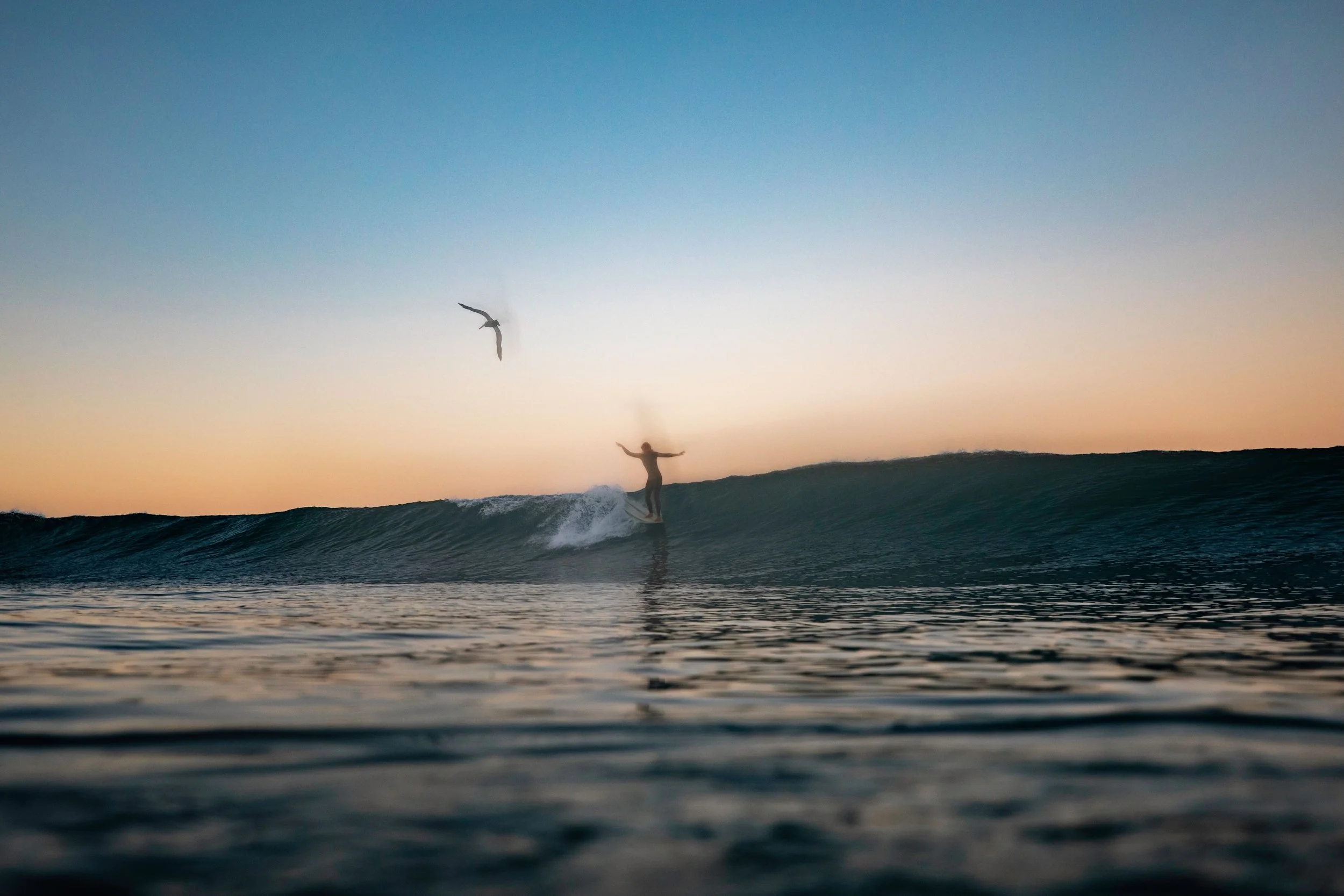
Team rider Chloe Coleman, Photo by Scott Smith
Why is Southern California's ocean still so warm in November, and what does it mean for the waves, tides, and marine life beneath our boards?
It's November in Southern California, and surfers are still paddling out in wetsuits typically reserved for warmer months. For many of us, a 2/2mm full suit is providing plenty of warmth when we'd normally be reaching for something thicker.
But while warmer water might sound appealing to surfers, what's happening beneath the surface tells a much more complicated story.
Southern California is experiencing an extraordinary marine heat wave, and with a strengthening El Niño adding to the warming, scientists are watching closely for the consequences to our coastline and marine ecosystems.
What Is Happening to Southern California's Ocean?
A marine heat wave occurs when ocean temperatures remain significantly warmer than normal for an extended period.
According to California's Ocean Protection Council, the marine heat wave affecting Central and Southern California began developing in 2025 and has become one of the largest on record. By August 2026, some affected areas were experiencing ocean temperatures as much as 8°F above normal.
Adding to the concern, a strong El Niño is developing in the Pacific. NOAA forecasts suggest that unusually warm water could persist along the West Coast into spring 2027.
While marine heat waves and El Niño are different phenomena, their combined effects can prolong ocean warming and place additional stress on marine ecosystems.
What Does This Mean for Southern California Surfers?
The most noticeable difference for surfers is water temperature.
Normally, as fall transitions into winter, Southern California surfers begin trading lighter wetsuits for thicker rubber. But in 2026, unusually warm ocean temperatures have extended the season for thinner wetsuits.
For some surfers, that means continuing to wear a 2/2mm or Long Jane well into November.
However, warmer water doesn't necessarily mean better surf.
Ocean temperature and wave quality are influenced by different factors. Swell direction, period, wind, tides, and coastal geography still determine how waves break.
The marine heat wave itself doesn't create better waves or guarantee smaller surf. But the developing El Niño could influence winter storm patterns, potentially bringing powerful swells to California.
And that's where things get interesting.
Will El Niño Bring Bigger Waves This Winter?
Historically, strong El Niño events have sometimes been associated with powerful Pacific storms and substantial winter surf along California's coast.
During El Niño, changes in atmospheric circulation can alter storm tracks across the Pacific. Depending on how those storms develop, Southern California may experience periods of larger surf, particularly at west-facing beaches.
But El Niño doesn't guarantee consistent swell or favorable conditions at every break.
For surfers, the coming winter could bring a combination of unusually warm water, powerful swells, and changing coastal conditions.
It's a reminder that warmer water doesn't necessarily mean a gentler ocean.
What About the Tides and Rising Sea Levels?
One of the more fascinating developments of 2026 involves something called a Kelvin wave.
Unlike the surface waves we surf, Kelvin waves are enormous, long-period ocean disturbances that travel through the Pacific and along coastlines. They are an important part of how El Niño influences ocean conditions.
As Kelvin waves move north along the West Coast, they can temporarily raise coastal sea levels by approximately 6-12 inches due to thermal expansion of the water, less of an actual physical wave and more like a higher tide than forecasted during all hours. That means current tide charts are off by as much as a foot, so keep that in mind when you’re planning your next surf.
While 6-12” might not sound like much, when elevated sea levels coincide with high tides, large swells, or storm surge, the effects can be significant and devastating.
For Southern California, that can mean:
Increased coastal flooding during high tides and storms.
Greater beach erosion when powerful swells reach shore.
Less exposed beach during already elevated tides.
Changes in how waves break over certain reefs and sandbars.
Kelvin waves don't change the gravitational forces that create our regular tides. Instead, they temporarily raise the water level upon which those tides occur.
For surfers, that distinction matters. A familiar break can behave differently when the overall water level is elevated.
What Is Happening to Marine Life?
While surfers notice the warmer water immediately, the most serious consequences may be unfolding beneath the surface.
Southern California's marine ecosystem depends on a delicate balance of ocean temperature, nutrients, currents, and food availability.
Prolonged warming can disrupt that balance.
Kelp Forests Under Stress
California's kelp forests are among the most productive marine ecosystems in the world.
Giant kelp provides food, shelter, and breeding habitat for countless species, including fish, invertebrates, and marine mammals.
Kelp thrives in cool, nutrient-rich water. When ocean temperatures remain unusually warm, particularly when upwelling is reduced, kelp growth can slow and forests may deteriorate.
The 2014–2016 marine heat wave contributed to devastating kelp losses in Northern California. Scientists are concerned that prolonged warming could threaten kelp forests again.
For Southern California surfers, kelp forests are a familiar part of our ocean landscape. Their health is closely connected to the health of the entire coastal ecosystem.
Fish Are Moving Into New Waters
As ocean temperatures change, so do the geographic ranges of marine species.
Warm-water fish that typically inhabit waters farther south can appear along California's coastline, while species that prefer cooler temperatures may move north or into deeper water.
During 2026, unusual sightings of tropical marine life, including hammerhead sharks, whale sharks, and other warm-water species, have been reported farther north along the California coast.
While these encounters can be fascinating, they also reflect significant changes in ocean conditions.
And when fish populations shift, the effects extend far beyond the fish themselves.
Sea Lions, Dolphins, and Seabirds
Marine mammals and seabirds depend on healthy populations of anchovies, sardines, and other small fish.
When warmer ocean temperatures alter plankton production and the distribution of baitfish, predators may have to travel farther to find food.
This can be particularly difficult for young sea lions and seabirds that depend on reliable food supplies.
Scientists are also monitoring the possibility of harmful algal blooms.
Some blooms produce toxins, including domoic acid, which can accumulate in fish and shellfish and poison marine mammals and seabirds.
Not every marine heat wave produces a harmful algal bloom, but prolonged changes in ocean conditions can increase ecological risks.
More Stingrays Along Our Beaches
One particularly noticeable development for Southern California beachgoers in 2026 has been an increase in stingray encounters.
Warm, shallow water attracts round stingrays, and some beaches have reported unusually high numbers of stings.
For surfers walking through shallow water, the familiar stingray shuffle remains a good precaution.
It's another example of how changing ocean temperatures can affect even the most routine parts of a surf session.
Why Cold, Nutrient-Rich Water Matters
One of the most important processes supporting California's marine ecosystems is called upwelling.
Normally, coastal winds help bring cold, nutrient-rich water from deeper in the ocean toward the surface.
Those nutrients support phytoplankton, microscopic organisms that form the foundation of the marine food web.
Phytoplankton feed small marine animals, which in turn support fish, seabirds, marine mammals, and larger predators.
During marine heat waves and El Niño events, this process can weaken.
Less nutrient-rich water reaching the surface can mean reduced productivity throughout the food chain.
That's why ocean warming is about much more than temperature. It can change the availability of food for an entire ecosystem.
Is This Our New Normal?
California has experienced significant marine heat waves before, including the infamous "Blob" that affected the Pacific from 2014 through 2016.
But scientists are increasingly concerned about the frequency, intensity, and duration of these events.
According to California's Ocean Protection Council, Southern California's baseline ocean temperature has increased approximately 1.8°F since the 1970s.
Individual marine heat waves are temporary, but the long-term warming trend makes unusually high ocean temperatures increasingly concerning.
Will Southern California surfers eventually consider November a normal month for a 2/2mm wetsuit?
It's too early to say.
What scientists do know is that marine heat waves are becoming more frequent and intense as the ocean warms.
A Surfer's Perspective: More Than Just Warm Water
As surfers, we spend countless hours in the ocean. We notice subtle changes in water temperature, currents, tides, kelp, and marine life.
Sometimes we're among the first to notice when something feels different.
At Mamala Surf, our connection to the ocean goes well beyond the wetsuits we wear. The ocean is where we find adventure, community, and a sense of belonging.
There's certainly something unusual about comfortably surfing Southern California in a 2/2mm full suit in November.
But the bigger story is what these changing ocean conditions mean for the environment we love.
Warm water may make paddling out more comfortable, but a healthy ocean is far more important.
The ocean gives us so much, it’s important for us to understand as much as we can about it’s changes and continue to give back to it (join us for our Beach Cleanup this Sunday 8am-11am at Scripps Pier in La Jolla, CA).
- Mamala Surf
Sources and Further Reading
NOAA Fisheries - 2026–27 El Niño and Marine Heatwave Updates
NOAA Fisheries - Kelvin Waves, Explained (October 2026)
California Ocean Protection Council - A Warming Ocean, a Marine Heat Wave, and a Super El Niño (September 2026)
Scripps Institution of Oceanography - FAQ: California's Marine Heat Waves