
The Complete Guide to Women's Surfing Wetsuits
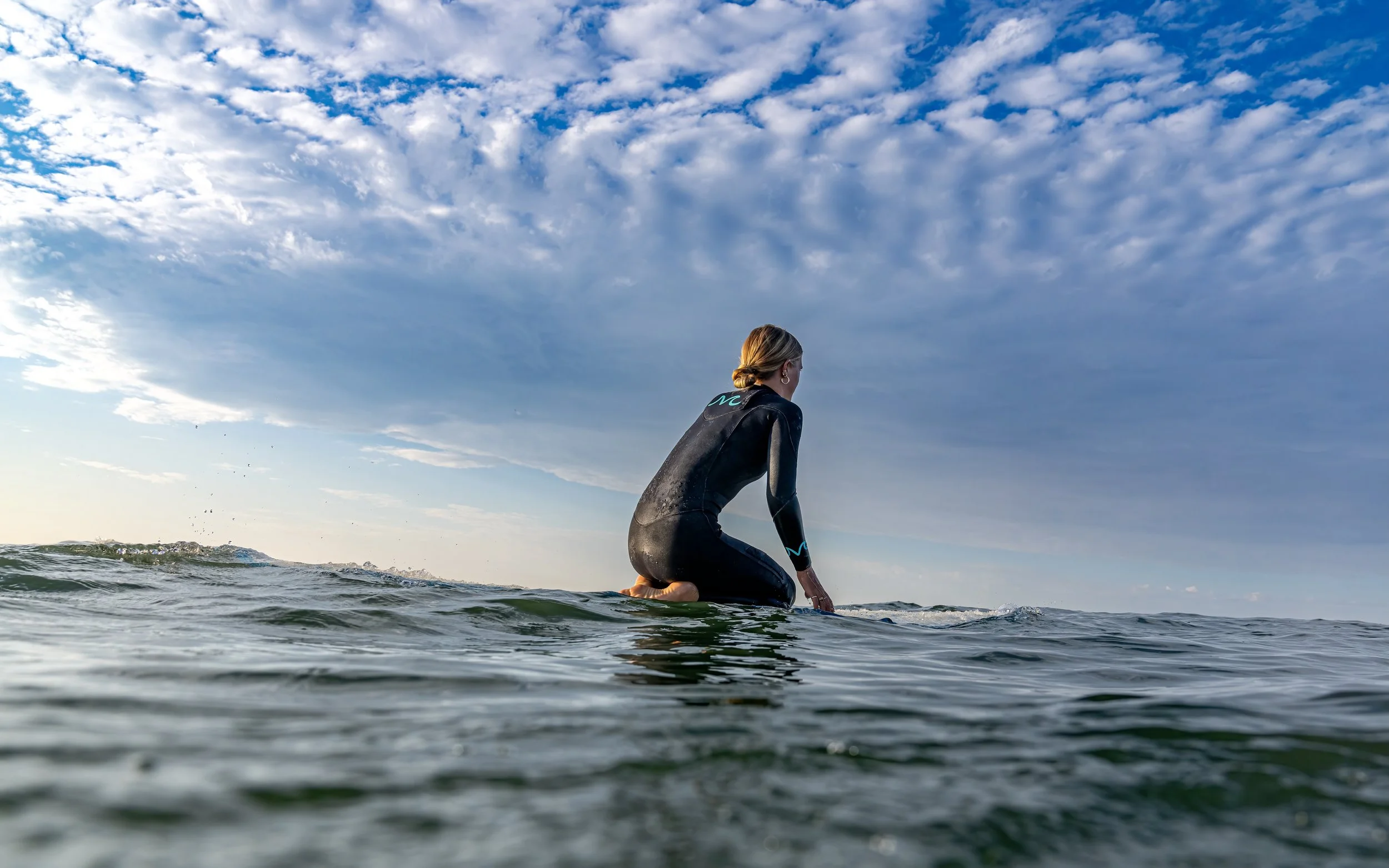
Photo by Sea Tech Photo
Buying your first women's wetsuit or upgrading to a premium cold-water suit can feel overwhelming.
Should you choose a 3/2mm or 4/3mm? How snug should a wetsuit fit? Is a chest zip warmer than a back zip? And do all wetsuits fit the same?
This guide answers the most common questions women ask before buying a wetsuit, helping you choose the right size, thickness, fit, and features for warmer, more comfortable surf sessions.
How Wetsuits Keep You Warm
A wetsuit doesn't keep you dry, it keeps you warm.
Premium neoprene traps a thin layer of water between your skin and the suit. Your body quickly warms this layer, while the neoprene and thermal lining reduce heat loss.
How warm a wetsuit feels depends on:
neoprene quality (Yamamoto #40 ranked highest quality)
wetsuit thickness
thermal lining
seam construction (double-blind stitched, glued & taped are highest quality).
fit
water temperature
wind and air temperature
your personal tolerance to cold
A properly fitted wetsuit should feel snug enough to minimize water flushing while still allowing you to paddle comfortably.
What Wetsuit Thickness Do I Need?
The basic guide for millimeter women’s wetsuits and water temperatures is:
Water Temperature Recommended Wetsuit
48–55°F 5/4/3mm or 4/3mm
55–60°F 4/3mm or 5/4/3mm
60–65°F 3/2mm or 4/3mm
65–70°F 2/2mm or 3/2mm
70–75°F Long Jane
Air temperature, wind, time in the water, your personal tolerance to cold, and your activity level all influence which thickness feels most comfortable.
How Should a Women's Wetsuit Fit?
A women's wetsuit should fit like a second skin - snug, but never restrictive.
There should be no large gaps, loose material, or bunching around the knees, lower back, or under the arms. At the same time, you should be able to paddle, squat, and move comfortably without restricting your breathing or circulation.
Always choose your size using the manufacturer's size chart, as wetsuit sizing varies between brands.
Mamala wetsuits are made with premium Yamamoto #40 limestone neoprene, one of the stretchiest performance rubbers available. After your first few surfs, the suit will naturally relax and conform to your body for an even better fit.
Unlike many brands, every Mamala wetsuit uses the same sizing pattern, so you don't need to size up when moving from a 3/2mm to a 4/3mm or 5/4/3mm.
How to Choose the Right Size
Choosing the correct size starts with accurate measurements.
Measure your height, weight, chest, waist, and hips.
Compare your measurements to the manufacturer's size chart.
Choose the size that best matches most of your measurements.
If you're between sizes or have questions, contact the manufacturer before ordering.
Premium vs. Standard Wetsuits
A quality wetsuit is an investment in warmth, comfort, flexibility, and durability.
While premium wetsuits cost more upfront, they typically last longer, retain their flexibility, and keep you warmer over years of surfing, making them a better long-term value and the most sustainable option.
Premium wetsuits cost more because they use better materials and more advanced construction methods that improve warmth, flexibility, comfort, and durability.
Higher-quality neoprene
Better seam construction (double-blind stitched, glued & taped)
Thermal linings
More advanced panel design
Superior fit and flexibility
Greater durability
Premium wetsuits don't just perform better, they last longer. High-quality materials, superior seam construction, and proper care help premium wetsuits maintain their warmth, flexibility, and fit for years. A longer-lasting wetsuit offers better long-term value and reduces waste, making it a more sustainable choice.
Chest Zip vs. Back Zip
Chest-zip wetsuits are the preferred choice for most experienced surfers because they provide a better seal, reduce water flushing, and offer greater flexibility while paddling.
Compared with traditional back-zip wetsuits, chest-entry designs generally:
Reduce water entry
Improve warmth
Increase shoulder flexibility
Create a more secure fit
How To Put On A Chest Zip Wetsuit
Step 1: Open the Entry
Step 2: Pull the Legs Into Position
Step 3: Pull the Suit Over Your Hips and Torso
Step 4: Insert Your Arms
Step 5: Pull the Chest Panel Over Your Head
Step 6: Zip and Secure
New to chest-zip wetsuits? Watch our step-by-step video showing how to put on a chest-zip wetsuit.
What Water Sports Can You Use a Surfing Wetsuit For?
Surfing wetsuits aren't just for surfing. They're designed to provide warmth, flexibility, buoyancy, and protection during any activity involving extended time in cold water.
A surfing wetsuit is perfect for:
Surfing
Bodyboarding
Stand-Up Paddle boarding (SUP)
Kayaking
Canoeing
Wakeboarding
Kitesurfing
Windsurfing
Diving
Snorkeling
Common Wetsuit Mistakes
Buying too large because it’s easier to put on
Choosing thickness based on air temperature instead of water temperature
Assuming every wetsuit brand fits the same.
Choosing a wetsuit for it’s color
Letting your wetsuit bake in the sun while drying
Storing your wetsuit next to open Velcro or an exposed leash
Frequently Asked Questions
Should a wetsuit feel tight?
Yes. A wetsuit should feel snug like a second skin without restricting breathing.
Do thicker wetsuits fit smaller?
No. At Mamala, every thickness uses the same pattern, so you order the same size whether you're buying a 2/2mm, 3/2mm, 4/3mm, or 5/4/3mm.
Is chest zip warmer than back zip?
Generally yes. Chest zips allow less water flushing and provide greater flexibility.
How long should a wetsuit last?
A premium wetsuit can last for years when properly cared for.
Should a new wetsuit be difficult to put on?
Yes. A properly fitting wetsuit takes a little time to put on. If it slides on easily while dry, it's probably too large.
Can a wetsuit stretch over time?
Yes. Premium wetsuits made from high-quality neoprene, such as Yamamoto #40, will relax slightly after the first few surf sessions while maintaining their shape and performance.
Can I use my surfing wetsuit for paddleboarding?
Absolutely. Surfing wetsuits are excellent for SUP, kayaking, wakeboarding, diving, and many other water sports.
How do I care for my wetsuit?
Rinse inside and out after use, hang inside out avoiding direct sunlight, store in a cool dry place and avoid sharp edges and velcro.
Choosing the right women's wetsuit doesn't have to be complicated.
Focus on four things: the correct size, the right thickness for your water temperature, premium materials, and a snug, second-skin fit. A quality wetsuit will keep you warmer, paddle more comfortably, and last for years, helping you spend more time enjoying every surf session.
About the Author
Angela Horacek is the founder of Mamala Surf. After years of struggling to find high-performance wetsuits designed specifically for women, she founded Mamala Surf to create premium cold-water wetsuits built by women, for women. Angela has spent years researching wetsuit materials, testing designs with surfers of all abilities, and helping hundreds of women find the right wetsuit for warmer, more comfortable sessions. Through Mamala Surf, she works closely with everyday surfers, instructors, and professional athletes to continually refine the fit and performance of each wetsuit.