
Cold-Water Surf Trips Worth Packing Your Wetsuit For
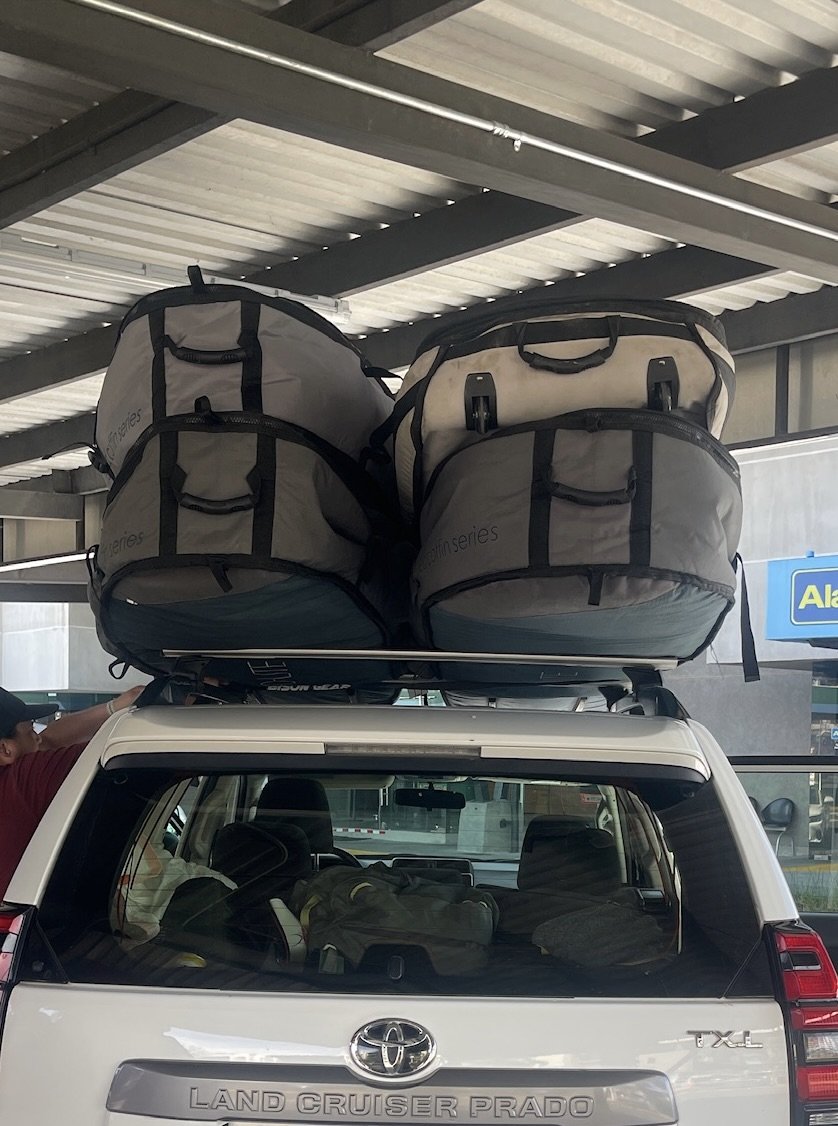
Where to Surf, What Wetsuit to Pack & Which Airlines Are Friendliest to Your Surfboard
There’s something pretty special about traveling somewhere new with a board bag and a wetsuit.
For years, I tended to plan surf trips around warm water. Why pack a wetsuit when you can surf in a bikini? Then a cold-water surf trip to Peru changed my perspective. Turns out, some of the world's most incredible waves are found in places where a wetsuit is definitely part of the adventure.
From the long lefts of Peru to the rugged coastlines of Ireland, Canada, Chile and New Zealand, cold-water surfing can mean uncrowded lineups, spectacular scenery and some seriously memorable waves.
The harder part can be getting your surfboard there.
Airline surfboard policies vary enormously. Some treat a board bag like regular checked luggage, while others charge additional sporting-equipment fees. And if you're traveling with a longboard, maximum board-bag length can quickly become the deciding factor.
There are few better feelings than watching the airline take your longboard bag without a raised eyebrow, an oversized-baggage debate, or an unexpected fee.
Actually, there is one.
Standing at baggage claim after a long flight and seeing that longboard bag finally roll out. You grab it, get to your destination, unzip the bag and find your favorite board exactly the way you packed it. In one piece and ready to surf.
Now that’s a good start to a surf trip.
So we put together a starting point for planning your next cold-water surf adventure: where to go, what wetsuit you might need and what to consider before booking your flight.
Cold-Water Surf Destinations & Traveling With A Longboard
Destination Where to Surf Wetsuit to Consider Airline to Consider Max Board Length Longboard Friendly?
🇨🇦 Canada Tofino / Vancouver Island 4/3–5/4/3. Air Canada 9’7” ★★★★★
🇬🇧 United Kingdom Cornwall / Wales / Scotland 4/3–5/4/3 British Airways 7’10” ★★
🇮🇪 Ireland Donegal / Sligo / West Coast 4/3–5/4/3 Check carrier carefully Varies ★★–★★★
🇫🇷 France Brittany / Atlantic Coast 3/2–4/3 Air France 9’10” ★★★★
🇪🇸 Spain Galicia / Asturias / Basque Country 3/2–4/3 Iberia 11’6” ★★★★★
🇵🇹 Portugal Ericeira / Peniche / Northern Portugal 3/2–4/3 TAP Air Portugal Varies ★★★
🇯🇵 Japan Northern Japan 4/3–5/4/3A NA Confirm ★★-★★★
🇦🇺 Australia Victoria / Tasmania 3/2–4/3 Qantas 9’1” ★★★
🇳🇿 New Zealand South Island / Taranaki / Otago 3/2–4/3 Air New Zealand 8’2” ★★★
🇿🇦 South Africa Cape Town / Western Cape 3/2–4/3 Emirates / other carriers Confirm ★★-★★★
🇨🇱 Chile Central & Southern Coast 4/3–5/4/3 Check carrier by route Varies ★★★
🇵🇪 Peru Lima South / Northern Peru 3/2–4/3 Check carrier by route Varies ★★★
🇲🇦 Morocco Taghazout, Tamraght, Imsouane 3/2-4/3 Royal Air Maroc Varies ★★★
US Connecting Flights
🇺🇸 U.S. Airline Surfboard Maximum Longboard Friendly? My Take for Longboarders
Alaska Airlines 10'5" board bag ★★★★★ Best U.S. choice for longboards
Hawaiian Airlines 10'5" board bag ★★★★★ Excellent; same new policy as Alaska
American Airlines 115 linear inches ★★ Not good for a typical 9'+ longboard bag
Delta Air Lines Route/aircraft dependent ★★★ Worth checking for international routes
United Airlines Route/aircraft dependent ★★★ Worth checking for international routes
Southwest Airlines Surfboards accepted ★★★★ Surfer-friendly In US; route network limits international usefulness
***Airline surfboard policies can vary by aircraft, route and operating carrier. Always confirm your board bag's actual length and total dimensions with the airline before booking, especially if you're traveling with a 9'+ board or connecting to a partner airline.
Wetsuit thickness is only a general starting point. Season, water temperature, wind, air temperature, session length and your own cold tolerance all matter.
Canada: Tofino & Vancouver Island
If dramatic scenery and true cold-water surfing sound like your kind of adventure, put Vancouver Island on the list.
Tofino has become one of North America's best-known cold-water surf destinations, with beautiful beaches, consistent swell and water cold enough to make good wetsuit equipment essential.
Depending on the season, this is 4/3 to 5/4/3 territory, with boots, gloves and a hood becoming important as temperatures drop.
For surfers traveling with longer boards, Air Canada is worth investigating because its published sporting-equipment policy accommodates considerably longer equipment than many international carriers.
Pack:4/3 or hooded 5/4/3 depending on season.
Mamala Rating: 🏄🏄🏄🏄🏄
United Kingdom & Ireland
Cold water doesn't seem to slow surfers down in the UK or Ireland.
Cornwall offers a well-established surf scene, while Wales and Scotland provide increasingly adventurous options. Cross over to Ireland and the Atlantic coastline gets even wilder.
Ireland's northwest coast in particular has become legendary for powerful waves, beautiful landscapes and serious cold-water surfing.
A 4/3 may work during warmer months, while winter conditions can call for a hooded 5/4/3 along with boots and gloves.
The catch for longboarders is air travel. Some major European carriers have maximum baggage lengths well under 9 feet. British Airways, for example, currently publishes a maximum length of approximately 7'10" for sporting equipment.
That's perfectly reasonable for many shortboards and mids—but not much help if your favorite board is a 9'6".
Longboard tip: Check the actual operating airline and aircraft before buying your ticket.
France
France may bring summer beach breaks to mind, but its Atlantic coastline provides plenty of wetsuit surfing.
Brittany is the colder-water choice, while farther south toward Hossegor the water becomes more moderate.
France is especially interesting for traveling surfers because Air France has policies addressing surfboards considerably longer than the limits imposed by some other European carriers.
For a longboarder, that alone can make the airline worth investigating before booking.
Pack:3/2 or 4/3 depending on location and season.
Mamala Rating: 🏄🏄🏄🏄
Northern Spain
Northern Spain combines beautiful coastline, great food and a long-established surf culture.
The Basque Country, Asturias and Galicia all offer surf, with water temperatures considerably cooler than the Mediterranean image many travelers associate with Spain.
A 3/2 may cover warmer conditions, while a 4/3 becomes the better choice as temperatures fall.
Don't forget: Airline sporting-equipment policies can vary significantly by route, so check your exact board-bag dimensions before booking.
Mamala Rating: 🏄🏄🏄
Portugal
Portugal has become one of Europe's great surf destinations, and for good reason.
Ericeira, Peniche and the coastline farther north offer an incredible variety of waves, while the Atlantic keeps the water cool enough that a wetsuit is part of surfing here for much of the year.
Portugal is also home to a thriving international surf community, including plenty of women traveling specifically to surf.
For most trips, a 3/2 or 4/3 will cover a lot of territory depending on season and personal cold tolerance.
Mamala Rating: 🏄🏄🏄
Morocco
Morocco has become one of the world's great surf destinations, combining warm sunshine with surprisingly cool Atlantic water.
Taghazout, Tamraght and Imsouane offer everything from mellow waves to long point breaks and powerful winter surf, making Morocco especially appealing during the prime fall and winter surf season.
Despite the warmer air temperatures, a wetsuit is part of the equation for much of the year. For most trips, a 3/2 will cover a lot of territory, while a 4/3 is worth considering during winter or if you tend to run cold.
Pack:3/2–4/3
Mamala Rating: 🏄🏄🏄
Japan
Japan might not immediately come to mind when you think about cold-water surf travel, but head north and things change quickly.
Northern Japan can offer legitimately cold surfing, beautiful scenery and a completely different surf-travel experience from the country's warmer southern regions.
ANA is particularly worth checking because sporting equipment may travel as part of the normal baggage allowance when it meets the airline's requirements. Aircraft size can affect whether longer equipment is accepted, so longboarders should confirm the specific flight.
Pack:4/3–5/4/3 in colder regions and seasons.
Mamala Rating: 🏄🏄🏄
Southern Australia
Australia isn't all boardshorts and bikinis.
Victoria and Tasmania offer incredible surfing in much cooler conditions than Australia's tropical image might suggest.
The famous coastline around Victoria alone could keep a surfer exploring for years.
Qantas is also relatively accommodating toward sporting equipment, with published dimensions that can work for some 9-foot boards.
If you're traveling with a particularly long longboard, however, measure the packed board bag carefully rather than relying on the length printed on the board.
Pack:3/2–4/3 depending on season and location.
Mamala Rating: 🏄🏄🏄🏄
New Zealand
New Zealand seems almost purpose-built for a surf road trip.
With coastlines exposed to multiple swell directions and a seemingly endless supply of beautiful places to explore, the hardest decision may be where to start.
The South Island, Taranaki and Otago are especially interesting for surfers willing to pull on some neoprene.
Air New Zealand is accustomed to surf travelers, but maximum equipment dimensions can make traditional 9'+ longboards more challenging than shorter boards.
Pack:3/2–4/3, with heavier equipment for colder conditions.
Mamala Rating: 🏄🏄🏄🏄
South Africa
Cape Town and the Western Cape provide another reminder that latitude doesn't tell the entire water-temperature story.
The cold Benguela Current keeps the Atlantic side chilly, creating a completely different experience from South Africa's warmer-water surf zones.
World-class waves, dramatic scenery and abundant surf options make the region worthy of a place on any cold-water surf bucket list.
Pack:3/2–4/3 depending on season, location and cold tolerance.
Mamala Rating: 🏄🏄🏄🏄
Chile
With thousands of miles of Pacific coastline, Chile could keep an adventurous surfer busy for a very long time.
The Humboldt Current helps keep the water cold, while consistent Pacific swell creates an extraordinary variety of surf.
Chile is especially appealing if your idea of a great surf trip involves exploring rather than sitting at one famous break.
Pack:4/3–5/4/3 depending on how far south you're headed and the time of year.
Longboard tip: Choose your airline around your board rather than choosing the flight first and discovering afterward that your board bag won't be accepted.
Mamala Rating: 🏄🏄🏄
Peru: The Cold-Water Trip That Changed My Mind
Peru deserves a special place on this list.
I normally gravitated toward warm-water destinations when planning surf trips. But the promise of an even longer left led me to Peru with Surf With Amigas, and to my first surf adventure outside California that actually required packing a wetsuit.
It changed the way I thought about surf travel.
The combination of incredible waves, the SWA crew and the experience of surfing one of the world's longest lefts made me realize I may have been overlooking some pretty incredible adventures simply because they required neoprene.
Peru's water is surprisingly cool thanks to the Humboldt Current, so despite the country's tropical latitude, a wetsuit is standard equipment in many surf regions.
And when you're standing at the top of an impossibly long left, you'll be pretty happy you packed one.
Pack:3/2–4/3 depending on season and location.
Mamala Rating: 🏄🏽♀️🏄🏽♀️🏄🏽♀️🏄🏽♀️
A Little Check-In Advice for Longboarders
One last tip: don't assume everyone behind the check-in counter knows their airline's surfboard policy, especially when it comes to longboards.
If you're told your board can't fly and you've already checked the airline's current policy, stay friendly and politely ask them to double-check or bring over a manager. We've found that another agent or supervisor can usually sort things out pretty quickly.
And if your check-in agent seems less than thrilled about your 9'6" travel companion, don't take it personally. Smile, know the policy and nicely ask for someone who does too.
Longboard travel rule #1: Know the airline's policy before you get to the airport. Longboard travel rule #2: Don't let one cranky check-in agent ruin your surf trip.
The Best Airlines for Surfers Aren't Necessarily the Cheapest
Here's something worth remembering when comparing flights:
The cheapest airfare isn't necessarily the cheapest way to get your surfboard there.
A $100 difference between two tickets suddenly doesn't look so important if the cheaper airline charges a large surfboard fee each way - or won't accept your 9'6" longboard at all.
Before booking, compare:
Maximum permitted board-bag length
Surfboard or sporting-equipment fee
Weight allowance
Whether multiple boards are permitted in one bag
Whether the board counts as regular checked luggage
Aircraft restrictions
Codeshare restrictions
Fees in both directions
And always check the operating airline, not just the airline whose name appears on your ticket.
Longboarders: Pay Extra Attention
If you travel with a shortboard, you have considerably more airline options.
Longboards change everything.
A carrier allowing a 7'10" board bag might sound surf-friendly until you arrive at the airport with a 9'4" log.
For surfers traveling from the West Coast, Alaska Airlines and Hawaiian Airlines currently stand out. Their published policy allows surfboard bags up to 10'5" on many mainline aircraft, with surfboards treated as standard checked baggage rather than automatically receiving a special surfboard surcharge.
That is the kind of policy worth considering when you're choosing an airline for a surf trip.
Should You Fly With Your Board or Rent?
There are times when renting makes more sense.
If you're changing planes several times, flying on smaller regional aircraft or heading somewhere with a good selection of quality rental boards, leaving your board at home can eliminate a lot of travel stress.
But we also understand the other side.
Sometimes you want your board.
If that's the case, investigate the surfboard policy before you investigate the airfare.
A slightly more expensive ticket on a surfboard-friendly airline could ultimately be cheaper - and considerably easier - than trying to save $75 on your flight.
What Wetsuit Should You Pack?
Your destination is only half the equation.
Consider the season, expected water temperature, air temperature, wind and how long you typically stay in the water.
As a general starting point:
70–75°F: Long Jane
65–70°F:2/2 or 3/2
60–65°F:3/2 or 4/3
55–60°F:4/3 or Hooded 5/4/3
48–55°F: Hooded 5/4/3
Not sure which thickness is right for you? Our Complete Guide to Women's Surfing Wetsuits covers wetsuit thickness, fit, water temperature and how to choose the right suit.
If you're traveling somewhere with fluctuating conditions and have room in your bag, bringing two wetsuit thicknesses can be a luxury you'll appreciate once you're there.
Cold Water Might Be Worth the Extra Baggage
Warm-water surf trips will always be hard to beat.
But cold water has its advantages.
Beautiful coastlines. Serious waves. Fewer people willing to paddle out. And destinations you might never have considered when your surf-trip search began with, "Where can I surf without a wetsuit?"
Pack the neoprene. Find an airline that likes your longboard almost as much as you do.
There are a lot of waves out there worth getting a little cold for.
AIRLINE TRAVEL NOTE: Airline surfboard policies, baggage fees, aircraft restrictions and size limits can change at any time and may vary by route and fare class. Information should be considered a planning guide only. Always confirm current surfboard policies and your packed board-bag dimensions directly with the operating airline before purchasing your ticket or traveling.Traveling with a longboard? Airline surfboard policies can vary by aircraft, route and operating carrier. Always confirm your board bag's actual length and total dimensions with the airline before booking, especially if you're traveling with a 9'+ board or connecting to a partner airline.