
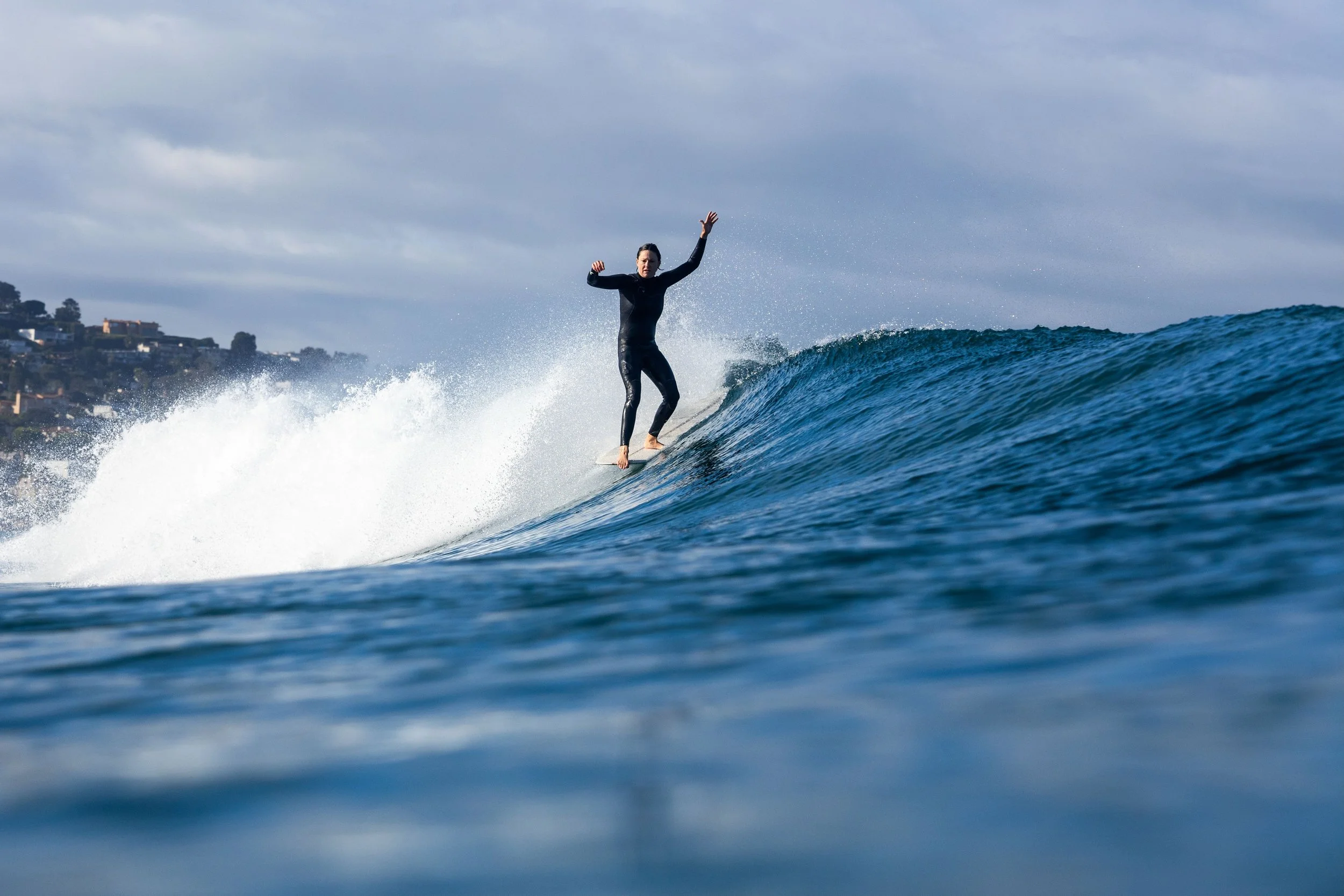
Summer Romero, Jersson Barbozza Photo
If you surf, you are probably hearing talk about this year’s El Niño and what it could mean for the coming winter. Bigger surf, warmer water, powerful Pacific storms and unusual weather patterns are all part of the conversation.
But what exactly is El Niño, and more importantly for surfers, what could it mean for the water temperatures at your local break?
And then there is the practical question: What wetsuit should you wear?
What Is Happening With El Niño?
El Niño begins thousands of miles away in the tropical Pacific Ocean. Normally, trade winds push warm surface water west across the Pacific. During El Niño, those winds weaken and warm water shifts east toward the Americas.
That enormous movement of warm ocean water can influence weather patterns around the world. It can alter the jet stream, affect winter storms, change coastal water temperatures and create very different conditions from one coastline to another.
For surfers, El Niño years have earned a reputation for producing memorable winters. Some of California's most famous big wave seasons have occurred during strong El Niño events.
That does not mean every El Niño guarantees massive surf at every break. Storm location, swell direction, wind and local conditions still have to line up. But when a strong El Niño develops, surfers pay attention.
El Niño Can Actually Raise the Ocean
One of the more fascinating parts of El Niño is something you cannot necessarily see while sitting in the lineup.
The ocean itself can rise.
During El Niño, huge pulses of warm water called Kelvin waves travel eastward across the tropical Pacific. When they reach the Americas, some of that energy continues northward along the coastline as what scientists call coastal trapped waves.
Warm water expands and the movement of this enormous volume of water can temporarily raise coastal sea levels.
NOAA has measured an El Niño related sea level increase of approximately 6 inches along portions of the California coast, with additional changes possible as stronger ocean signals reach the West Coast.
That may not sound dramatic until unusually high ocean levels combine with high tides, storm surge and large surf. Under the right conditions, total water levels can rise considerably more.
It is one more reason El Niño winters can be so interesting along the coast. The waves arriving at your local break are only one part of a much larger movement taking place across the Pacific Ocean.
What Does El Niño Mean for Surfers?
For West Coast surfers, one of the most noticeable effects can be warmer than normal ocean temperatures.
Southern California often feels the difference first, but unusually warm water associated with El Niño can extend northward along the California coast and sometimes farther into the Pacific Northwest.
That does not mean you should put your winter wetsuit away.
Water temperature is only part of how warm you feel while surfing. Air temperature, wind, cloud cover, session length and the amount of time you spend sitting between sets all matter.
A 62°F sunny morning with light wind can feel very different from 62°F water during a cloudy, windy dawn patrol.
The best rule is simple:
Dress for the water you are actually surfing, not the month on the calendar.
What Wetsuit Will You Need on the West Coast?
San Diego
Typical winter water temperatures in San Diego are generally around 59°F to 63°F, although temperatures fluctuate throughout the season.
During a strong El Niño, warmer than normal coastal water could keep temperatures toward the upper end of that range or occasionally above it.
For many women, a 3/2mm full suit will remain the winter standard.
On warmer days, especially if the water remains in the low to mid 60s, a 2/2mm full suit may be all you need.
That is one of the advantages of choosing your wetsuit based on water temperature instead of automatically reaching for your winter suit.
Orange County, Los Angeles and Malibu
Winter water temperatures generally settle into the upper 50s and low 60s.
A 3/2mm wetsuit will be the most versatile choice for many surfers.
If El Niño keeps the water unusually warm and temperatures remain above 62°F, cold tolerant surfers may find a 2/2mm full suit surprisingly comfortable.
Ventura and Santa Barbara
Water temperatures generally run a little cooler as you move north.
Expect temperatures from the mid to upper 50s during much of the winter, making a 3/2mm or 4/3mm a good choice depending on your cold tolerance.
If temperatures fall below about 58°F or you tend to get cold easily, move into the 4/3mm.
Central California and Santa Cruz
Winter water temperatures commonly fall into approximately the 52°F to 57°F range.
For most women, a 4/3mm wetsuit is the starting point.
Women who get cold easily, surf early mornings or spend long sessions in the water may prefer a hooded 5/4/3mm when temperatures approach the lower end of the range.
Northern California
Winter water temperatures are typically in the low to mid 50s.
A 4/3mm may work during warmer periods, but a hooded 5/4/3mm provides considerably more protection when water and air temperatures drop.
Booties and gloves may also become part of the equation depending on where you surf and your personal cold tolerance.
Oregon and Washington
Pacific Northwest surfers already know the drill.
Winter ocean temperatures can range from the upper 40s into the low 50s.
A hooded 5/4/3mm wetsuit, combined with appropriate booties and gloves, is generally the right starting point.
Even if El Niño raises water temperatures slightly, this is still serious cold water surfing.
What About the East Coast?
El Niño affects East Coast surfers differently.
The warm Pacific water associated with El Niño does not simply travel across the country and warm the Atlantic Ocean. Instead, El Niño changes atmospheric circulation and the position of the jet stream.
That can affect winter storms, rainfall, air temperatures and coastal weather throughout the eastern United States.
For East Coast surfers, that means your wetsuit decision still comes down primarily to the actual Atlantic water temperature at your break.
And those temperatures vary enormously from Maine to Miami.
New England
By the middle of winter, ocean temperatures can fall into the upper 30s and low 40s.
This is hooded 5/4/3mm territory, along with cold water booties and gloves.
At these temperatures, warmth is not simply about comfort. Proper equipment becomes an important part of staying safe in the water.
New York and New Jersey
Winter water temperatures can fall from the low 50s early in the season into the upper 30s and low 40s during the coldest part of winter.
Early winter may allow for a 4/3mm, but once temperatures drop, most surfers will want a hooded 5/4/3mm with booties and gloves.
Virginia and the Outer Banks
This part of the East Coast can experience a significant temperature swing during winter.
Depending on location and time of year, water temperatures can range from the 40s into the 50s.
A 4/3mm can cover the warmer end of the range, while a hooded 5/4/3mm becomes the better choice as water temperatures fall.
Southern North Carolina
Winter water temperatures can range from the low 50s into the 60s.
A 3/2mm or 4/3mm will cover many conditions, depending on the temperature and your personal cold tolerance.
Northern Florida
Winter water temperatures can range from the upper 50s into the upper 60s.
That makes a 2/2mm or 3/2mm full suit a good choice for many winter sessions.
This is another place where a lightweight full suit makes sense. You get full body coverage without the bulk and heat of a thicker wetsuit.
South Florida
South Florida is a different story.
Water temperatures can remain in the 70s through much of winter, so many surfers will not need a traditional full wetsuit.
A Long Jane or 2mm full suit may be enough during cooler weather, particularly when cold fronts bring lower air temperatures and wind.
Mamala Surf Wetsuit Temperature Guide
The water temperature should be your starting point, but air temperature, wind, session length and how easily you get cold all play a role.
43°F to 53°F: Hooded 5/4/3mm
52°F to 58°F: 4/3mm or Hooded 5/4/3mm
58°F to 65°F: 3/2mm or 4/3mm
62°F to 68°F: 2/2mm or 3/2mm
Wetsuit thickness is only part of the equation. Neoprene quality, seam construction, thermal lining and fit all affect warmth and flexibility. Mamala wetsuits are made with premium Yamamoto #40 limestone neoprene, thermal fleece, glued and double blind stitched seams and 100 percent interior seam taping.
Fit matters too. A loose wetsuit allows water to circulate through the suit, while a properly fitted wetsuit should feel like a second skin. Mamala wetsuits are designed specifically for women's bodies and should fit snugly when new. Yamamoto #40 relaxes slightly after the first one or two sessions, so there is no need to size up in a thicker suit.
Let the Water Tell You What to Wear
One of the interesting possibilities during a strong El Niño is warmer than normal water along parts of the West Coast. If San Diego is 64°F in December, you do not need to reach for your winter wetsuit simply because it is December. A 2/2mm may be plenty, while someone who gets cold easily may prefer a 3/2mm.
The same rule applies everywhere. If Santa Cruz is 54°F, reach for your 4/3mm or 5/4/3mm. If New Jersey is 40°F, it does not matter how massive El Niño is in the Pacific. You are still surfing in 40°F water.
Check the current water temperature before you paddle out, then factor in the wind, air temperature and how long you plan to surf.
Dress for the water you are surfing, not the month on the calendar.
A Winter Worth Watching
El Niño is a reminder of how connected our oceans and weather really are. El Niño's movement of warm water across the tropical Pacific can influence sea levels along California, winter storms across the country and surf conditions from San Diego to New England.
What this El Niño ultimately delivers remains to be seen, but it could be a memorable winter for surfers. Check the conditions, know your water temperature and choose the wetsuit that keeps you warm, comfortable and focused on the waves.
Because when the swell arrives, the last thing you want to be thinking about is being cold.
Keep Reading
NOAA Fisheries: Ocean Indicators We’re tracking for El Niño Arrival on the West Coast
The Complete Guide to Women’s Surfing Wetsuits
Everything you need to know about wetsuit thickness, fit, warmth, materials and choosing the right suit for your conditions.